Shaped for you.

Every board starts with one question from former World Champion Patrice Belbeoc'h: how will it feel under your feet, in the wind you actually get?

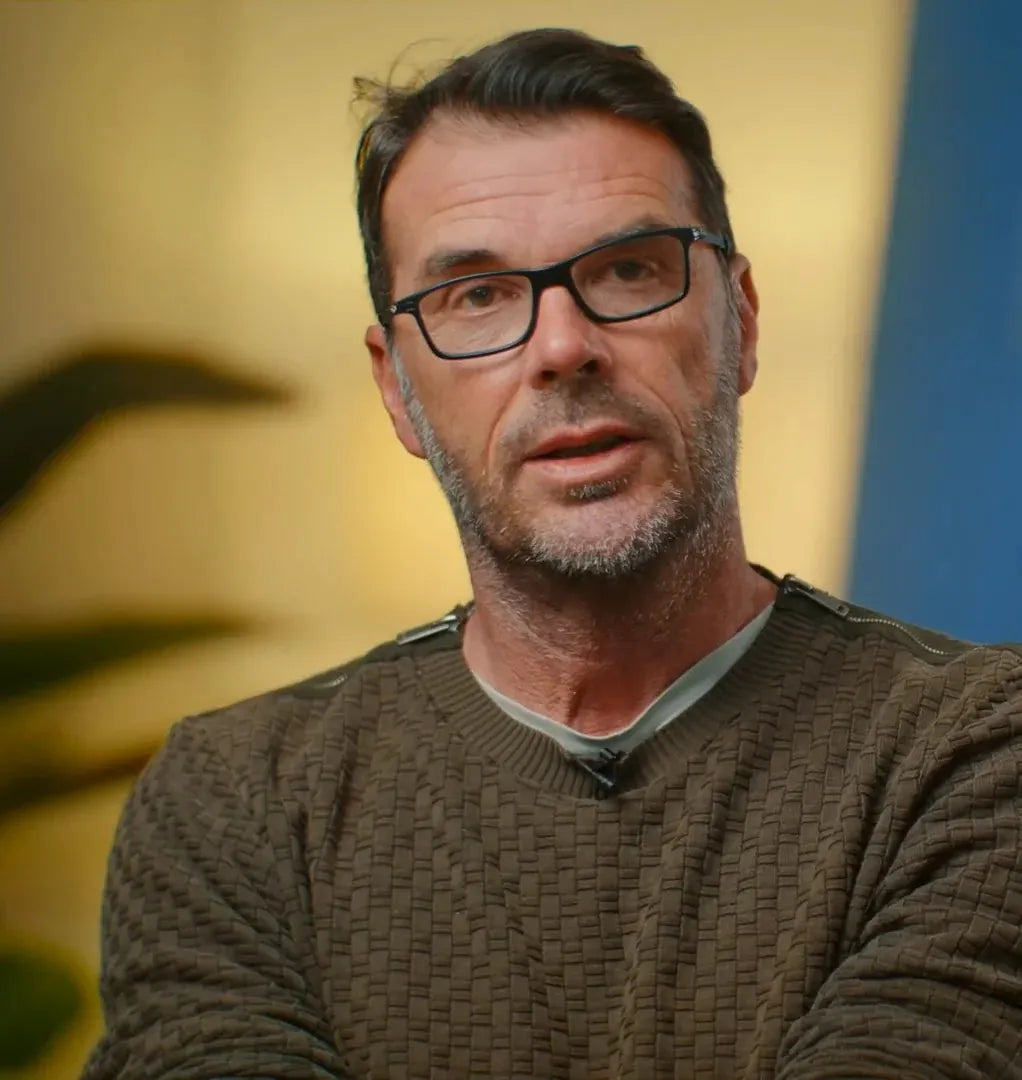
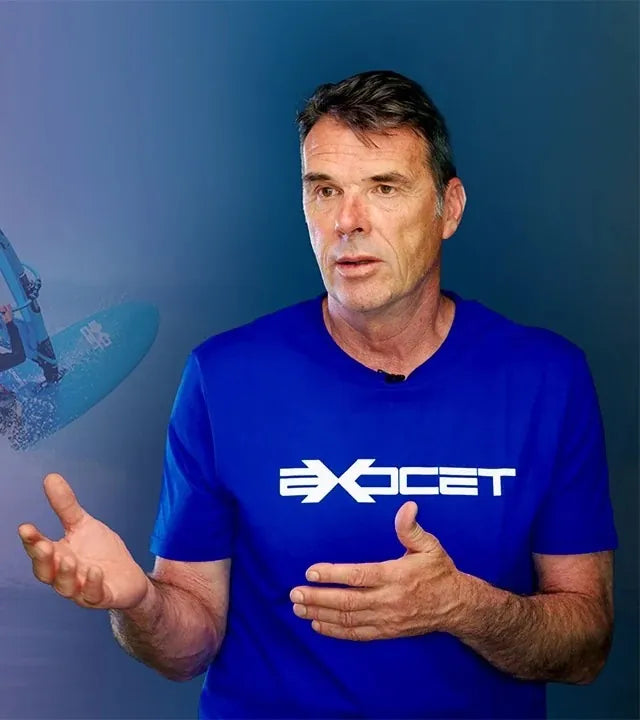
Patrice Belbeoc'h, founder and shaper of Exocet

The rider behind Exocet.

Patrice Belbeoc'h started windsurfing in Brest, Brittany, in 1982. Ten years after turning pro he was world wave champion. Exocet began as his own custom race boards.

“Shaped for you means we are shaping boards for everyone.”

Four moments that shaped the range.

  1. 1982

    Brest, Brittany

    Patrice starts windsurfing on a board his father brought back from Tahiti.

  2. 1991

    The first Exocets

    A small custom shop shapes Exocet boards for Patrice's World Cup season: 40 to 50 a year.

  3. 1996

    World wave champion

    Patrice wins the wave title and finishes second in slalom and overall.

  4. 1999

    Into production

    The first range brings school boards with a built-in wheel and the Double-Density Shock Absorbers.

From the archive.

Catalogue pages and magazine tests from 2005 to 2024: the boards that led to today's range.

  • Turbo Boost².

    2005 Turbo Boost². Ben van der Steen, European slalom champion 2005, on the catalogue spread. DDSA was already on the deck.

  • 3X.

    2010 3X. The wave range of 2010, in 70, 82 and 96 litres.

  • RS.

    2018 RS. Slalom boards in for a magazine test.

  • X-Wave.

    2018 X-Wave. The wave board of the 2018 range.

  • The 2020 range.

    2020 The 2020 range. RF Foil, RS, Cross and X-Wave, with new designs and upgraded construction.

  • RS 62.

    2024 RS 62. In for a magazine test.

Cross 94, sixteen years apart.

Exocet Cross 94, 2010 catalogue
2010 Cross 94 94 L · 240 × 60 cm
Sails 4.0–6.8 m²
Cross V8 Carbon 94
2026 Cross V8 94 Carbon 94 L · 226 × 61 cm
Sails 4.0–6.8 m²
“The Cross is a bit of a legendary board for a lot of people.”

Same volume, same sail range, 14 cm shorter. Over the years the outline and rails changed; the rocker line from mast foot to tail did not. Riders coming from an old Cross see a difference, but the ride stays the same.

Patrice Belbeoc'h, 2026

Watch: the Cross secret sauce · 3:48 →

Ridden by people like you.

First sessions, weekend reaches, slalom heats. Shot in Tarifa and Cádiz this season.

Rider on a Neon inflatable windsurf board in Tarifa
Rider holding an XO Sails Experience rig in Tarifa
Rider carrying a Zypher inflatable board on the beach in Tarifa
Patrice Belbeoc'h explaining a board design

Patrice explains what you feel.

“With the Breeze, you can go half a size down and still get as much power.”

The step tail keeps the water flat under you while you build speed. On the plane, the Breeze V2 rides 35 to 40 cm shorter.

Watch: Breeze V2 tuning tips · 7:09 →
“Put the mast base right in the centre of the box.”

Every Exocet starts from the same centred setup. A centimetre back frees the board in flat water, a centimetre forward keeps the nose down in chop.

Watch: RS V6 tuning tips · 7:27 →

From first planing to PWA.

See all boards →
  • “Requires less physical and technical commitment than average.”
    Scross V3 115 · Planchemag 432
  • “A super versatile one that adapts to all conditions.”
    Cross V8 94 Carbon · Planchemag 432
  • “Performance accessible to the greatest number.”
    RS V6 71 · Planchemag 432

Built for schools. Loyal to the longboard.

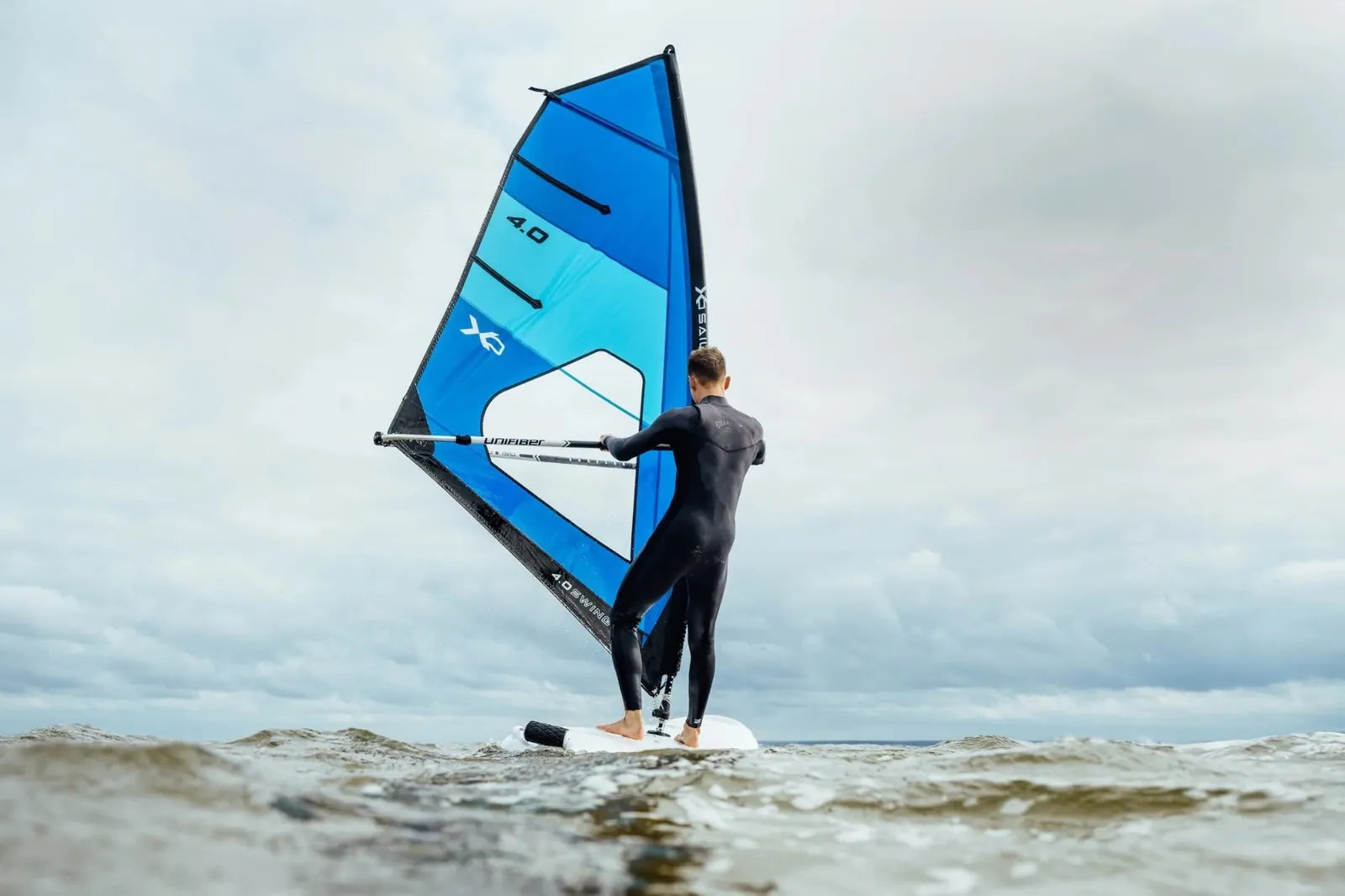
Beginner on an XO Sails Swing 4.0 rig

Where most of us started.

Exocet's first range already had school boards with a built-in wheel, so students could roll them to the water. The Link V5 still has one, and takes sails from 1.5 to 10 m² for daily school use. The Nano V4 155D adds a retractable daggerboard.

School & Entry boards →
Windsurfer LT fleet racing

The longboard never left.

Exocet's step-tail longboard grew into the Kona One-Design class. Today the Windsurfer LT, the RS 380 V7 and the Breeze V2 keep longboards gliding, racing and riding waves.

Longboards →

Find the board shaped for you.